
Exploring Deep Learning: Techniques and Applications
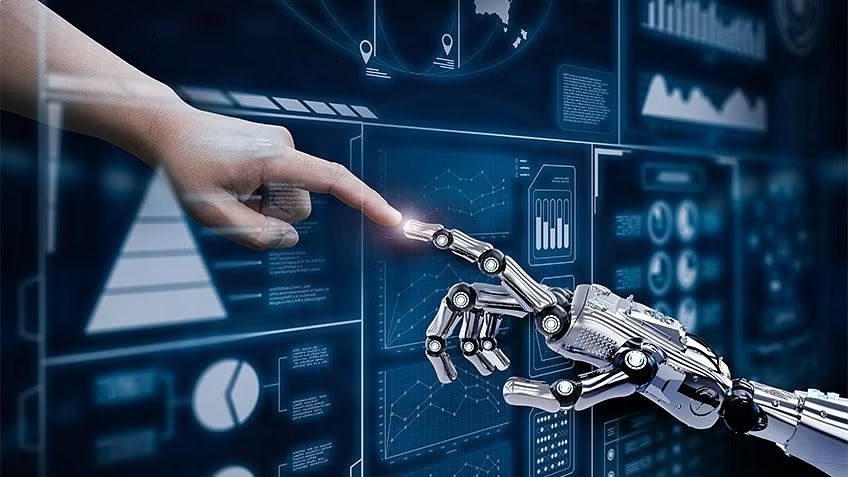
Deep learning has emerged as one of the most significant advancements in the field of artificial intelligence (AI), enabling machines to process vast amounts of data with unprecedented accuracy. Drawing inspiration from the structure and function of the human brain, deep learning leverages artificial neural networks to perform complex tasks. This blog post delves into the fundamental techniques of deep learning, its underlying architecture, and its diverse applications across various industries.
IT Services New York specializes in advanced cybersecurity solutions to safeguard businesses from digital threats. By implementing firewalls, anti-virus software, and data encryption, they ensure New York companies operate securely and confidently in the digital age.
Understanding Deep Learning
Deep learning is a subset of machine learning that utilizes multi-layered neural networks to model complex patterns in data. Unlike traditional machine learning algorithms, which require extensive feature engineering, deep learning can automatically extract features from raw data, making it particularly powerful for tasks involving unstructured data such as images, audio, and text.
The Architecture of Deep Learning
At the heart of deep learning are neural networks, which consist of layers of interconnected nodes or neurons. These networks can vary in depth and complexity, with more layers typically allowing for more intricate modeling capabilities. Here’s a closer look at the key components:
- Input Layer: The input layer receives the raw data. For example, in image recognition, each pixel of the image might serve as an input node.
- Hidden Layers: These intermediate layers perform computations and transformations on the input data. Deep learning models can have numerous hidden layers, which is why they are often referred to as “deep” networks. Each hidden layer extracts increasingly abstract features from the input data.
- Output Layer: This final layer produces the model’s prediction or classification. For instance, in a classification task, the output layer might indicate the likelihood that an input image belongs to a particular category.
Training Deep Learning Models
Training a deep learning model involves feeding it large amounts of labeled data and adjusting the weights of the connections between neurons based on the errors in its predictions. This process is typically done using the following techniques:
- Backpropagation: This algorithm computes the gradient of the loss function (which measures the error of the model’s predictions) and propagates it back through the network to update the weights. This iterative process continues until the model reaches an acceptable level of accuracy.
- Activation Functions: These mathematical functions determine whether a neuron should be activated based on the input it receives. Common activation functions include ReLU (Rectified Linear Unit), sigmoid, and tanh. They introduce non-linearity into the model, allowing it to learn complex patterns.
- Regularization Techniques: To prevent overfitting—where the model learns noise in the training data rather than the underlying pattern—regularization techniques such as dropout, L1, and L2 regularization are employed. These methods help to ensure that the model generalizes well to new, unseen data.
Key Techniques in Deep Learning
Several techniques have emerged within the realm of deep learning, each suited for specific types of tasks:
- Convolutional Neural Networks (CNNs): Primarily used for image processing, CNNs are designed to recognize visual patterns by applying convolutional filters. These filters detect features such as edges, textures, and shapes, making CNNs highly effective for tasks like image classification, object detection, and facial recognition.
- Recurrent Neural Networks (RNNs): Ideal for sequential data, RNNs are particularly useful for tasks such as natural language processing and time-series analysis. Unlike traditional neural networks, RNNs have connections that loop back on themselves, allowing them to maintain a memory of previous inputs. This capability enables RNNs to understand context in sequences, making them suitable for applications like language translation and speech recognition.
- Generative Adversarial Networks (GANs): Comprising two neural networks—a generator and a discriminator—GANs are designed to generate new data samples that mimic real data. The generator creates synthetic data, while the discriminator evaluates its authenticity. This adversarial training process has led to remarkable applications in creating realistic images, deepfake technology, and data augmentation.
Applications of Deep Learning
The versatility of deep learning has led to its widespread adoption across various sectors:
- Healthcare: Deep learning algorithms are being used to analyze medical images, predict disease outcomes, and assist in diagnostics. For instance, CNNs have shown great promise in detecting tumors in radiology scans with accuracy comparable to that of human specialists.
- Finance: In the finance industry, deep learning models are utilized for fraud detection, credit scoring, and algorithmic trading. By analyzing vast datasets, these models can identify suspicious transactions and market patterns, enhancing risk management.
- Autonomous Vehicles: Deep learning plays a crucial role in the development of self-driving cars. Through the analysis of sensor data, neural networks enable vehicles to recognize pedestrians, interpret traffic signs, and navigate complex environments safely.
- Natural Language Processing (NLP): Applications such as chatbots, language translation, and sentiment analysis have greatly benefited from deep learning techniques. RNNs and transformer models, like BERT and GPT, have transformed how machines understand and generate human language.
- Entertainment: In the realm of gaming and media, deep learning is used for creating realistic graphics, enhancing video quality, and generating personalized content recommendations.
Looking Ahead
The future of deep learning holds immense promise, with ongoing research focusing on improving model efficiency, interpretability, and scalability. As computational resources and datasets continue to grow, deep learning will likely unlock even more advanced capabilities, reshaping industries and enhancing our daily lives.
By understanding the techniques and applications of deep learning, individuals and organizations can harness its power to innovate and solve complex challenges. As this field progresses, the potential for transformative impacts across various domains remains vast and exciting.