Optimize Store Performance with Real-Time Embedded POS Analytics Software
In 2026, the retail of the modern era is not characterized by the owner of the greatest inventory anymore, but rather the owner of the most easily accessible data. The disconnect between the collection of data and the use of data has become the central point in the failure or success of stores, as old brick-and-mortar stores expand to complex digital ecosystems. Traditional Point of Sale (POS) systems frequently serve as data silos, a collection of transactions that need to be extracted manually and take hours of spreadsheet work to do so.
Retailers are moving to embedded POS analytics in order to remain competitive. It is an advanced technology that incorporates business intelligence directly into the software used by staff and managers on a daily basis. Real-time analytics enable instantaneous response, whether in the form of staffing, stock, and promotions, which transforms a reactive business model into a proactive business model.
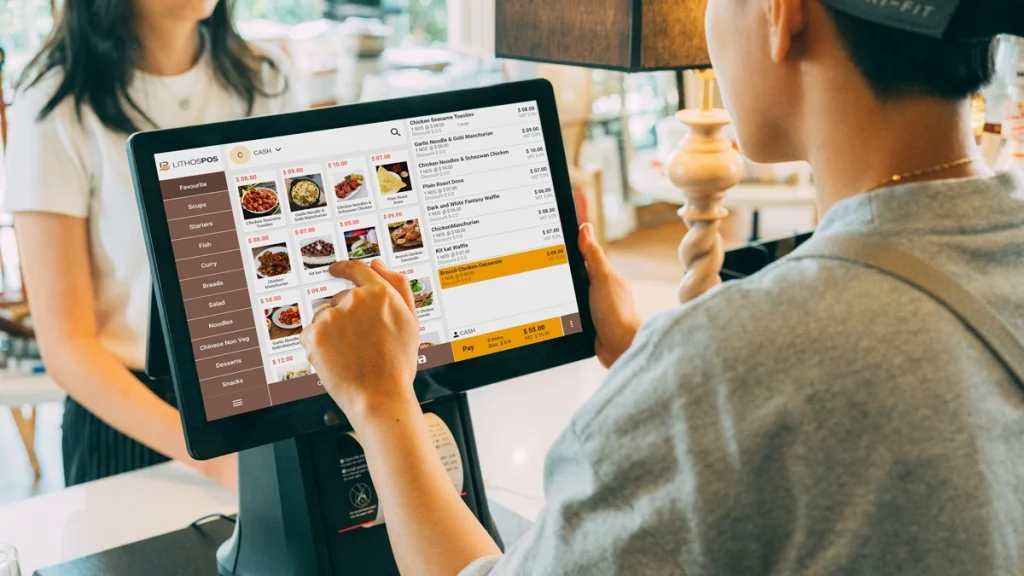
By deploying iccube embedded analytics for retail, companies can circumvent the interruption of third-party BI tools by locating visual data in the locus of decision-making. The architecture of this is that the individual who is nearest to the customer, the store manager or sales associate, has the information that he or she requires at the point of transaction. Placing data visualization inside the POS interface itself allows organizations to make sure that all their teammates, no matter how skilled they are technically, will be able to decipher trends and respond to them in real-time.
The 2026 Retail Success Key Performance Indicators (KPIs)
In order to render higher performance, retailers have to go beyond merely a total sales measurement. Live software can be used to monitor subtle KPIs, which give an accurate depiction of operational well-being.
- Sales per Square foot (SPF): A real-time visit to the performance of various regions of a physical store compared to their size.
- Average Transaction Value (ATV): Monitoring the real-time data of the upsell rates to give instant feedback to the sales personnel.
- Inventory Turnover Ratio: To identify the dead stock before it is time to take a heavy clearance discount.
- Staffing to Sales Ratio: This is matching the labor hours with the highest foot traffic patterns to reduce overhead without compromising services.
Traditional Batch Reporting Traditional Batch Reporting Real-Time Embedded Analytics
| Metric | Traditional Batch Reporting | Real-Time Embedded Analytics |
| Data Latency | 24-48 hours (End-of-day sync) | Instantaneous (Live streaming) |
| Access Point | Special BI logins | Built into the POS interface |
| Actionability | Reactive (Reviewing past errors) | Proactive (Adjusting current shifts) |
| User Barrier | High (Data literacy needed) | 0/Low (Intuitive visual dashboards) |
| Scalability | Challenging in various shops | Multi-store automated multi-tenant syncing |
Live Data Integration offers a strategic benefit in the following ways.
- Accuracy in Stock Control
The out-of-stock or overstock cycle is one of the greatest drainers of retail income. The analytics are embedded to track real-time inventory across various channels.
When a particular item is trending on social media and getting sold quickly in a particular area, the system can automatically propose the possibility of transferring stocks to other regions that are not performing so well before the shelf runs out of stock.
- Dynamic Labor Optimization
The controllable cost of labor is also often the highest cost of retail. Foot traffic information with real-time POS analytics enables the managers to observe the “power hours” when the store is busiest, yet the conversion is minimal. This is normally a sign of insufficient personnel on the floor.
On the other hand, in the case of dead zones, managers can redeploy such employees to inventory work or training to save on the labor wastage.
- Extremely Individualized Customer Experiences.
With the analytics in place at the point of sale, associates are told the lifetime of a customer, his or her past purchase history, and even their likely preferences. This amount of clienteling is critical in the luxury and boutique retail sector in 2026 where there is a possibility of a personal touch that can not be accurate with the assistance of online algorithms.
Overcoming Key Technical Obstacles
A transition to an embedded model would necessitate a change in data processing. The current retail stacks are based on declarative knowledge – making sure that data summaries are not merely rows of numbers, but call-to-actions.
An example would be, as opposed to reporting that sales are declining by 10 percent, the system could indicate: 10 percent sales hit because of a 15 percent decrease in foot traffic; flash promotion should be introduced.
- Data Security: To ensure that embedded dashboards are highly encrypted to secure PII (Personally Identifiable Information).
- API Connectivity: Using strong APIs to bridge the connection between the POS, CRM, and inventory management systems into one source of truth.
Granting access to these dashboards to floor managers through the use of tablets or handheld devices rather than the back-office PC.
Conclusion
Real-time embedded POS analytics is no longer viewed as a luxury option at the enterprise level; the chain must be available to any retailer with aspirations of staying afloat in a fast-paced digital economy.
Using a dedicated solution such as iccube embedded analytics for retail, companies are able to eliminate the time lag between gathering the data and making a decision, and, consequently, can act in a certain way never before possible. It is the live information that makes the contemporary retail development run, whether it is making a call to change up a promotion at noon to avoid a slow afternoon or making sure that the correct staff is available during a morning rush.
FAQs
Does embedded analytics slow down POS hardware?
A: No. Most modern embedded systems are either cloud-based or based on lightweight systems, such that the bulk of data processing is performed on the server side such that the local POS interface itself is responsive.
Can I integrate it with my current legacy POS system?
A: It is possible to wrap many legacy systems with current analytics layers through integrations through application interfaces, but the most natural experience is in full-cloud POS systems.
Can this be applied in large retail chains only?
A: In fact, small to medium businesses tend to have the greatest ROI. Since they have smaller margins, a 5 percent improvement in inventory waste and the ability to optimize labor can make a big difference to the bottom line.
Does the software have automated notifications?
A: Yes. The majority of 2026-grade software can do exception reporting, whereby you will only get an alert when a certain metric (high refund rate or low stock level) is below a predefined threshold.